

Tasks and Equipment
| Task # | Movement | Description / Equipment |
|---|---|---|
| 1 | Burpees Deadlifts | Facing DBs – 2 Dumbbells arranged as a line |
| 2 | Squats | Shoulder racked – 2 Dumbbells |
| 3 | Alternating Single-Arm Ground to Overhead | 1 Dumbbell |
| 4 | Forward Lunges | Suitcase hold – 2 Dumbbells |
| 5 | Renegade Rows | Push-up + 1 arm row = 1 rep – 2 Dumbbells |
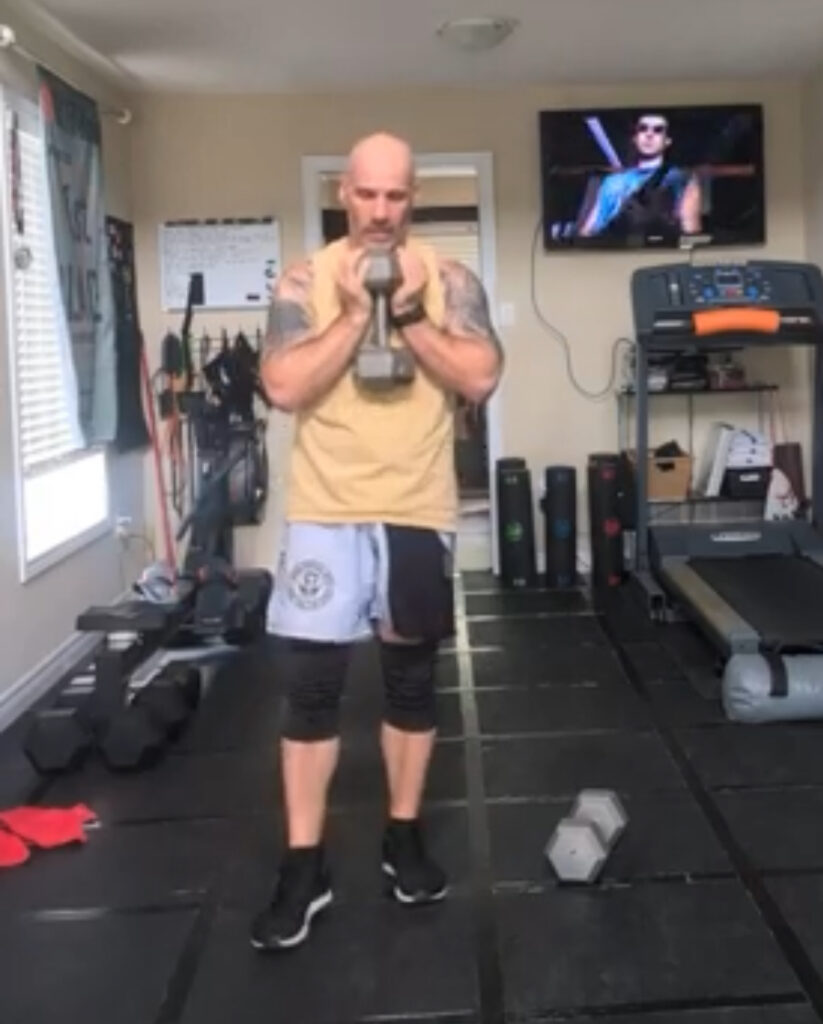
| 6 | Goblet Surrenders | 1 Dumbbell |
| 7 | Floor Chest Press | 2 Dumbbells |
| 8 | Dumbbell Sit-ups | 1 Dumbbell |
| 9 | Hang Clean & Press | 2 Dumbbells |
Cardio Levels (Run Before and After Each Zone – 10 Runs Total)
| Level | Running Distance |
|---|---|
| The 0.0 | None |
| The 4K | 400 meters |
Divisions and Rep Schemes
| Division | Reps | Male Weight | Female Weight |
|---|---|---|---|
| Div 1 | 10 | 70 lb | 50 lb |
| Div 2 | 20 | 50 lb | 35 lb |
| Div 3 | 30 | 35 lb | 20 lb |
REP STANDARDS:
Task 1: BURPEE DEADLIFTS
1a. Dumbbells are to be placed parallel to each other on the ground.
1b. First rep starts standing, facing the dumbbells.
1c. Athlete lowers to the ground until hips and chest touch simultaneously.
1d. Athlete stands up while lifting both dumbbells. Lock out knees and hips, dumbbells in line with or behind hips.
1e. Do not drop or throw the dumbbells.
Task 2: SQUATS
a. The athlete will start by raising both dumbbells into the front rack position or resting the dumbbells on the shoulders with hands securing the weights in place.
b. The athlete then squats until the hips descend low enough that the femur runs parallel to the floor at minimum.
c. The athlete then stands up until both knees and hips are in full lock out. This completes one full rep.
d. Do not drop or throw the weights.
Task 3: ALTERNATING DB G2OH
a. The first rep begins by the athlete choosing a single dumbbell with one hand from the ground and lifting it overhead until lock out is achieved simultaneously in the knees, hips, lifting shoulder and lifting elbow.
b. At the peak of the rep the lifting arm must be perpendicular to the ground. This completes one rep.
c. The athlete must then lower the weight to the ground using only one hand, remove that hand, and start the next rep with the other hand. At no point in this task can both hands touch the Dumbbell at the same time.
d. The last rep is counted once the dumbbell is set back on the ground.
e. Do not drop or throw the weights.
Task 4: FORWARD LUNGES
4a. Start by lifting both dumbbells in suitcase position.
4b. Step forward into a lunge until back knee touches ground.
4c. Stand up, bringing front leg back to standing. Lock out hips and knees.
4d. Dumbbells must stay at sides or behind hips.
4e. Do not drop or throw weights.
Task 5: RENEGADE ROWS
a. The first rep begins as the athlete moves into the upper plank position with one hand on each dumbbell.
b. The athlete then lowers to the prone position and their upper chest is touching the ground or touching the dumbbells.
c. The athlete then raises themselves into the plank position and lifts one dumbbell until the dumbbell touches their chest. The support arm must remain locked out during the lift and the dumbbell must remain horizontal. This completes one full rep.
d. The athlete sets the weight down and completes the next rep by using the opposite dumbbell.
e. The athlete may raise up from the prone position into the upper plank position by any means.
f. Do not drop or throw the weights.
Task 6: GOBLET SURRENDERS
a. The first rep begins as the athlete holds one dumbbell with both hands, goblet style, at chest height.
b. The athlete lowers down to one knee and then lowers the other knee until both knees are on the ground simultaneously.
c. The athlete then stands up one leg at a time until both knees and hips are in full lock out. This completes one full rep.
d. Do not drop or throw the weights.
Task 7: FLOOR CHEST PRESS
a. The first rep begins as the athlete is lying face up with their back, feet, and hips remaining on the ground. One dumbbell is in each hand with both elbows on the ground.
b. The athlete then presses the dumbbells upwards until full lock is achieved in both elbows simultaneously. The arms must be perpendicular to the ground at the peak of the rep. This completes one full rep.
c. The athlete must then lower the elbows back to the ground to begin the next rep.
d. Do not drop or throw the weights.
Task 8: DUMBBELL SIT-UP
a. The rep starts as the athlete is lying on their back with their hands on a single dumbbell touching the ground behind their head.
b. The athlete then pulls the weight over their head and body sitting up until the dumbbell touches the ground between their legs to complete the rep.
c. The athlete then returns the dumbbell to the starting position behind their head touching the ground to begin the next rep.
d. The last rep ends as the dumbbell touches the ground between the athlete’s legs.
e. Do not drop or throw the weights.
Task 9: HANG CLEAN AND PRESS
a. The first rep begins as the athlete lifts two dumbbells, one in each hand, bringing them to a front rack position.
b. The athlete will then press both dumbbells overhead until full knee, hip, and elbow lock out is achieved simultaneously. The arms must be perpendicular to the ground at the peak of the movement. This completes one full rep.
c. The dumbbells must then be lowered to below the hips before starting the next rep.
d. The athlete may lower the dumbbells to the ground (and by doing so, requiring themselves to complete a full clean rather than a hang clean) before starting the next rep.
e. Do not drop or throw the weights.
PENALTIES:
a. Each occurrence of dropping or throwing weights will result in a no rep, requiring the athlete to complete an extra rep of the task in which the violation occurred. A possible time penalty may be accessed in unforeseen situations.
b. Any reps not performed to standard will result in a no rep requiring the athlete to complete another rep of the task.
c. Any physical or verbal abuse of a staff member, volunteer, official, or another athlete may result in disqualification.
d. Unsportsmanlike conduct may result in disqualification.
e. Missing assigned start time may result in moving the athlete’s run to a different time of the day if possible, and in some cases, the athlete may lose their opportunity to race.